
How Long Is Barber School & What Are Its Requirements?
Is your social media feed full of pictures of clean fades and textured high tops? Are you the friend everyone turns to when they need a shave or beard trim? If so, it might be time to pour your passion into the rewarding field of barbering.
In modern barbershops, skilled barbers curate personalized experiences for their clients. Day to day, barbers craft unique looks with skills like hair cutting, styling, beard grooming, and consultations on hair and skin care.
As you think about a career in barbering, several questions come up such as:
How long is barber school?
How long does it take to get a barber license?
What do you learn in barber school?
And, most important:
Does barber school align with my future goals?
We have answers right here. Continue reading to see if barber school is the right fit for you.
How Long Is Barber School
The duration of barber school varies, based on state requirements and program content. On average, it takes around 1,000 to 2,000 hours, which can be completed in 6 to 12 months when enrolled in a full-time program. The length of part-time barber school varies but can take one to two years.
The journey of barber school looks different from state to state. Each state has specific requirements that dictate the exact hours required to obtain a license. Researching your state’s barber school requirements ensures you’re well informed about becoming a licensed barber.
Requirements for barber school training are usually dictated by state regulatory boards, with many necessitating hours above or below the national average. For example:
Average: California and Texas require 1,000 hours
Higher than Average: Michigan requires 1,800 hours, while Tennessee requires 1,500 hours.
Lower than Average: Vermont only requires 750 hours. Oregon requires 746 hours.
*State licensing requirements and required hours are subject to change. Prospective students should confirm current requirements with their state regulatory agency.
Requirements for Barber School
To enroll in a barbering program, you typically need to fulfill specific criteria or provide documentation that meets your state’s barber school requirements. Here are some common prerequisites:
- Age: Many barber schools require students to be at least 16 to 18 years old.
- Identification: A state ID or driver’s license is often required to verify identity and age.
- Education: Some states request transcripts from high schools or junior high as part of the application process.
A helpful first step is to meet with the school’s Admissions Advisor to review program information and take a tour of the campus, where you’ll have the opportunity to meet with the Financial Services Advisor to discuss options for the program.
What Do You Learn in Barber School?
Educational topics cover a spectrum of skills, from foundational techniques to the art of conducting successful client consultations. Barber school curriculum includes vital skill development, technical aspects of the trade, and working with clients in environments that mirror a real-world barbershop.
First, students learn fundamental skills such as:
- Haircutting
- Chemical work, including coloring and perms*
- Men’s shaving and grooming
- Basic skin care and grooming
- Hairpiece design, fitting, and maintenance
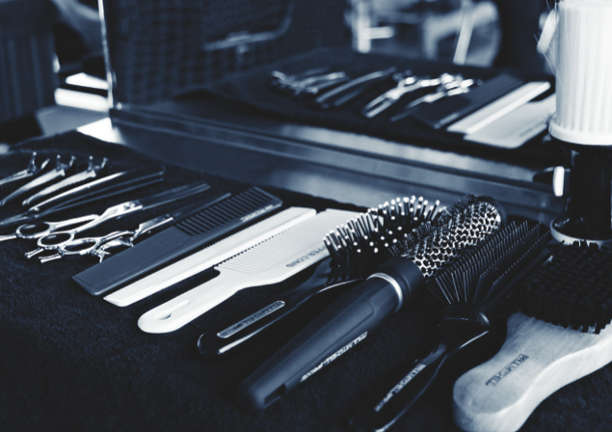
- Working with various barbering tools
* Licensing laws vary by state; hair color and other advanced services may require extra training.
In the classroom, prospective barbers study theoretical concepts before translating them into hands-on experience on mannequin heads. This builds a solid foundation in both theory and technical skills.
One crucial skill that sets barbers apart is mastery of the straight razor. While both barbers and cosmetologists work with hair cutting and styling, only licensed barbers can perform traditional straight razor services.
Next, students advance to the floor to work on live models or volunteers in a simulated barbershop setting. Under the guidance of educators, students practice skills including:
- Applying and refining the techniques learned in the classroom
- Using professional products and tools on various models
- Honing client consultation skills to practice effective communication
- Crafting an exceptional client experience
Practicing on real people gives students hands-on experience in building their skillsets as barbers and as industry professionals.
Finally, students transition to more advanced and creative techniques as they prepare for their state board exam. The last part of an education in barber school offers:
- More independent, unsupervised work
- A focus on increasing speed and efficiency
- Opportunities to build a portfolio
- Avenues to fulfill State Board Barber License requirements
The final phase of a barbering education aims to equip students with the proficiency and confidence needed to successfully prepare for state board exams.
Exciting Prospects After Barber School
The barbering industry continues to expand, offering plenty of career paths beyond traditional barbershops. The growing trend of women seeking shorter, more modern haircuts has also helped the industry expand. Licensed barbers can find exciting opportunities in unexpected places, including:
- Luxury hotels and high-end resorts
- Cruise ships
- Military bases
- Fashion shows and photo shoots
- Professional sports teams
* Employment opportunities vary by individual, location, and experience. Completion of a barbering program does not guarantee employment.
How Do You Obtain a Barber’s License?
A barber’s license is required to become a professional barber. Your state’s licensing board sets the criteria for licensure, but these common barber license requirements give you an idea of what to expect:
- Exam Fee: Varies by state but prospective barbers typically pay an exam fee
- Written Exam: Evaluates theoretical knowledge in areas like hygiene, safety, local health regulations, and barbering principles.
- Practical Exam: Tests your hands-on skills in a controlled setting, including haircutting, styling, shaving, and other practical skills
- Documentation: May include proof of education and personal identification to ensure you comply with licensing requirements
- Licensing Fee: Required by most states, separate from the examination process
After you get your license, you will have to renew it periodically according to local guidelines. Understanding your state’s requirements will help you prepare for licensure and maintain a valid license throughout your career.
How Long Does It Take to Get a Barber License
Pursuing barber school is the first step toward the exciting opportunities in the field of barbering. Within your barber program, you will progress through learning essential skills and techniques to immerse yourself in the art and science of barbering.
Your timeline for obtaining a barber license depends on the structure of your program, whether you’re a part-time or full-time student, state guidelines, and your learning pace.
The Paul Mitchell Schools’ Barbering Program
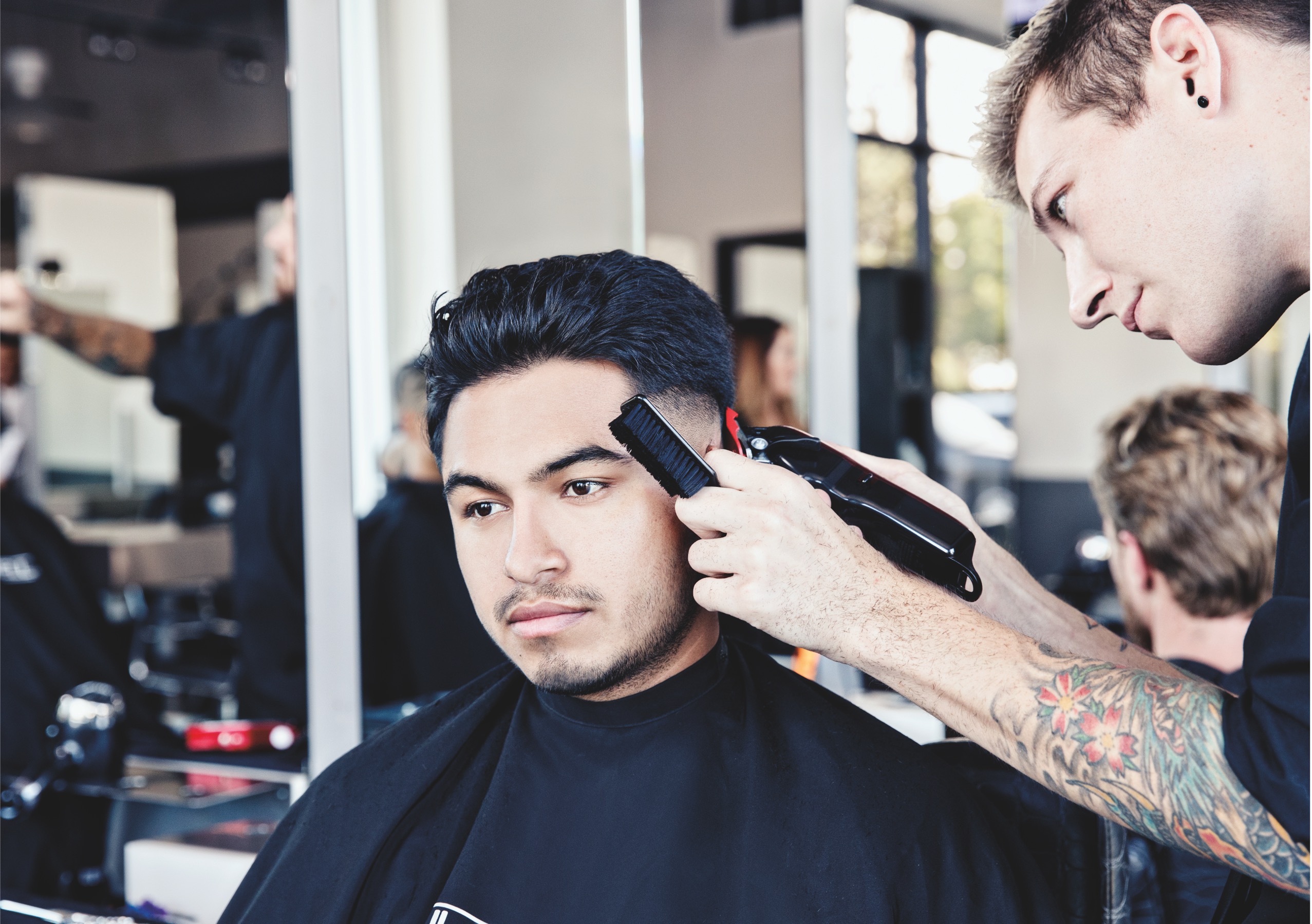
At Paul Mitchell Schools, our in-depth curriculum, leading facilities, and hands-on training are designed to help our students, known as Future Professionals, meet the requirements to become a licensed barber. Our barber school students can explore various financial aid options for those who qualify, including scholarships, grants, and federal aid, as they pursue their education and navigate barber license requirements.
Our classes blend hands-on experience, live demonstrations, and multimedia for an interactive and comprehensive learning environment to suit all kinds of learners.
The Paul Mitchell Schools barber program includes three levels: Core, Adaptive, and Creative. Each level has a specific purpose to help you get comfortable learning new skillsets as you practice on mannequins and service guests. Graduates who successfully complete the program requirements may be eligible to apply to take their state board examinations, subject to state approval.
The Paul Mitchell School Barber Program Curriculum Covers:
- Barber Cutting
- Triangular, round and square geometric shapes
- Scissor-over-comb taper with long and short disconnection
- Soft, low, medium and high fades
- Flat tops
- Hairpieces
- Freehand clipper work and detailing
- Classic trend haircuts
- Barber Coloring
- Short hair color placements
- Comb lights
- Brush lights
- Hand painting
- Barber Style and Texture
- Pre-dry and finishing blow dry methods for volume and control
- Barber Grooming
- Ear, nostril, and eyebrow waxing
- Shaving
- Beard grooming
- Beard maintenance
Take the first step toward your future by requesting information about our barber programs or finding a Paul Mitchell school near you.
Share This Post:


